
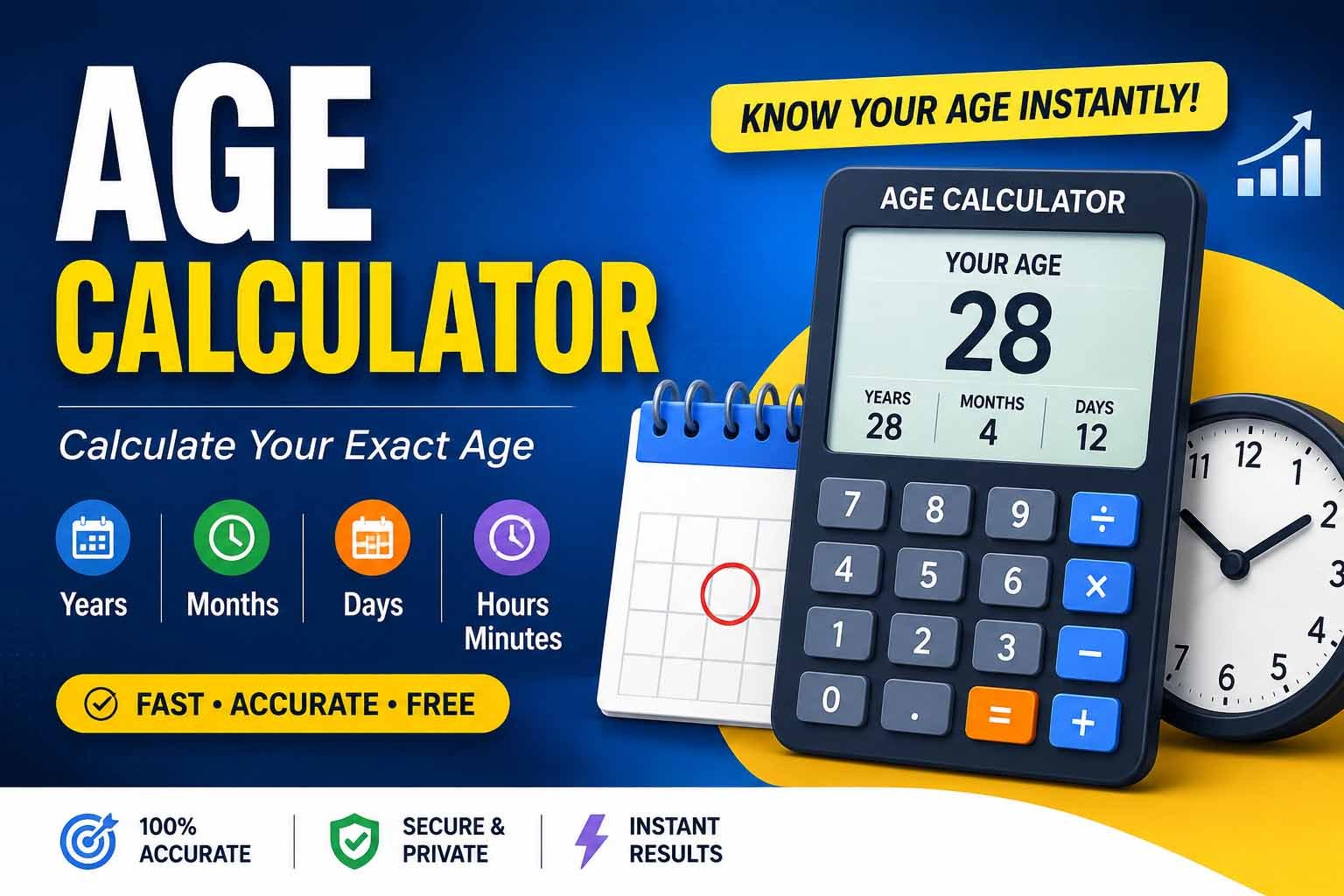
Have you ever needed to know your exact age but found yourself second-guessing the math? You subtract your birth year from the current year, and it seems simple enough. But what if your birthday hasn't come yet this year? And what about leap years? Suddenly, a simple age calculator is not just a convenience—it's a necessity.
I remember the first time I needed to calculate my exact age in months and days for a medical form. I sat there with a calendar, counting days, trying to remember which months had 30 or 31 days, and wondering if February of 2008 was a leap year. That's when I realized how valuable a reliable age calculator can be.
In this article, I'll share everything I've learned about age calculators—how they work, why they're accurate, and why you should trust them for important calculations. Whether you're a student, a parent, an HR professional, or just someone who wants to get their age right, this guide will help you understand the science and math behind accurate age calculation.
What Is an Age Calculator?
An age calculator is a digital tool that computes the exact time difference between two dates—typically your date of birth and the current date. The result shows your age in various units: years, months, weeks, days, hours, minutes, and even seconds.
But what makes an age calculator different from doing the math yourself? It's all about precision and speed. While you could calculate your age manually, an age calculator does it instantly and accounts for every variable you might overlook.
The most sophisticated age calculators don't just subtract years. They understand the nuances of different calendar systems. They know that months have different lengths. They automatically adjust for leap years. In short, they handle all the complexity so you don't have to.
Table of Contents
The Difference Between Chronological and Biological Age
Before diving deeper, let's clarify two important concepts. Chronological age is your actual age in years, months, and days—it's simply the time that has passed since you were born. Biological age, on the other hand, is a measure of how old your body appears based on various health factors.
An age calculator exclusively measures chronological age. It tells you exactly how many years, months, and days you've been alive. It doesn't measure health or fitness. It simply provides a mathematical fact.
Why Accurate Age Calculation Matters
Age calculation is surprisingly important in many areas of life. A small error can have significant consequences.
In Education
Schools rely on accurate age to place children in the correct grade. A child who should be in kindergarten might be placed in first grade if their age is calculated incorrectly. This affects their learning, social development, and long-term academic success.
I once heard about a family who moved to a new state and discovered that their child's school used a different age cutoff date for enrollment. What seemed like a simple age calculation suddenly determined whether their child started school that year or had to wait another twelve months.
In Healthcare
Medical professionals use chronological age to determine appropriate treatments, medication dosages, and screening schedules. A baby's age is often measured in weeks or months during the first year of life. An incorrect age could lead to inappropriate dosages or missed development milestones.
When my friend was expecting her first child, her doctor regularly calculated the exact age of the pregnancy in weeks and days. These calculations helped determine when to perform certain tests and when to schedule the delivery. The accuracy of these age calculations had real implications for the health of both mother and baby.
In Legal Matters
Your age determines many legal rights and responsibilities. You can vote at 18, drive at 16, and drink alcohol at 21 in most U.S. states. Your age affects when you can marry, sign contracts, serve on a jury, and retire.
Employers need accurate age calculations for benefits, retirement plans, and compliance with labor laws. Insurance companies base premiums on age. The Social Security Administration calculates benefits based on your exact age.
In Daily Life
Beyond these formal purposes, we use age for countless personal reasons. We celebrate birthdays. We reflect on how old we were when certain life events happened. We compare ages with friends, colleagues, and family members. Accurate age calculation matters in relationships, in competition, and in understanding our place in life.
How an Age Calculator Works
Now that we understand why age accuracy matters, let's look at how an age calculator actually works. The mathematics behind it is precise and elegant.
Date Parsing and Validation
The first step is parsing the dates. When you enter your date of birth into an age calculator, the tool needs to understand exactly what date you mean. This might sound simple, but date formats vary around the world. Some countries use MM/DD/YYYY, while others use DD/MM/YYYY.
A good age calculator will validate your entry to ensure it's a real date. It will check that the day exists in the month you entered. It will confirm that you're not entering a date in the future. This validation prevents errors before the calculation even begins.
Date Difference Calculation
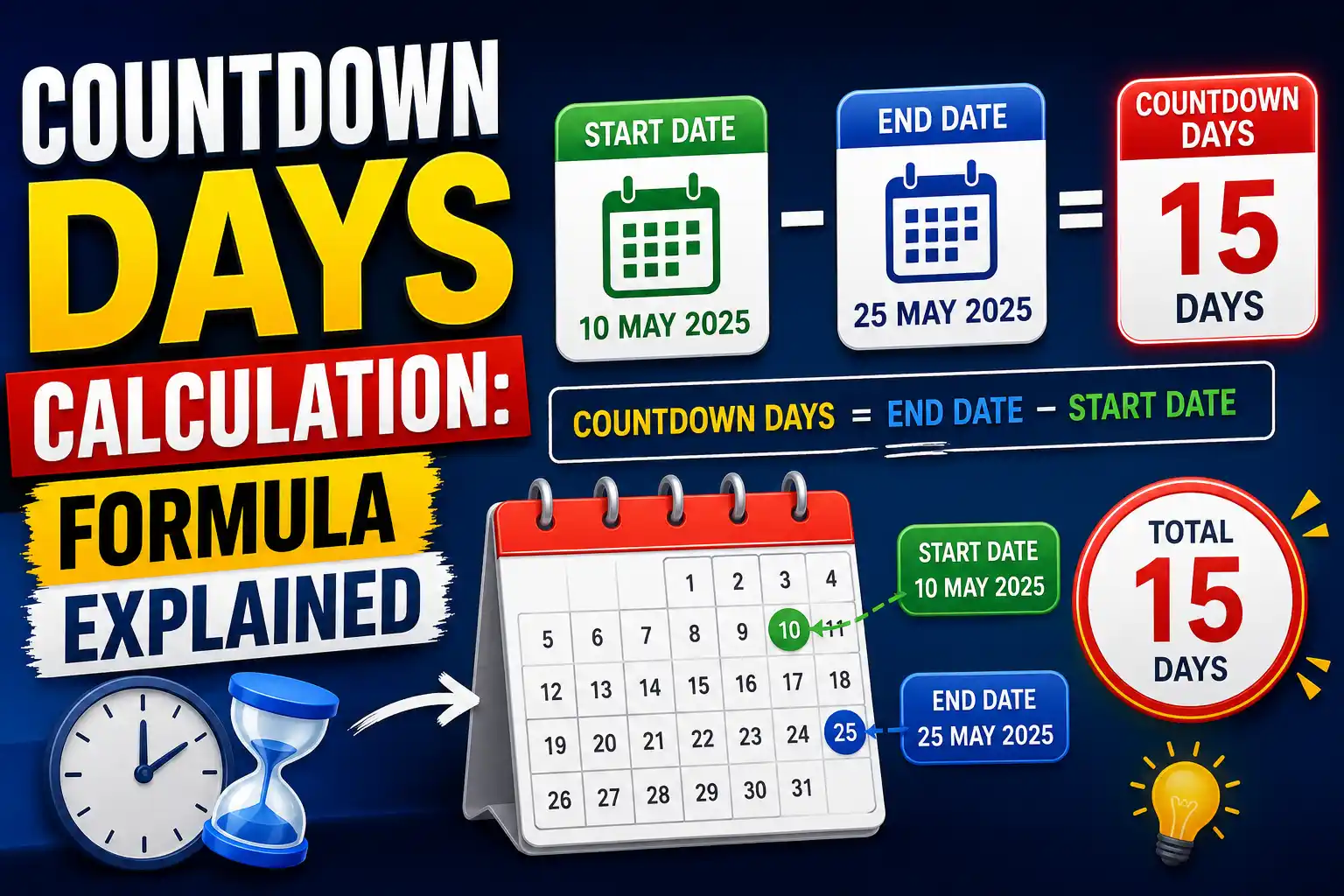
Once dates are validated, the age calculator computes the difference between your birth date and the current date. This is where the precision really matters.
The calculator considers each component of the date—year, month, and day. It subtracts the birth date from the current date, adjusting for months with different lengths and for leap years. The result is your exact age down to the day.
The Age Formula
The mathematical formula an age calculator uses can be expressed this way:
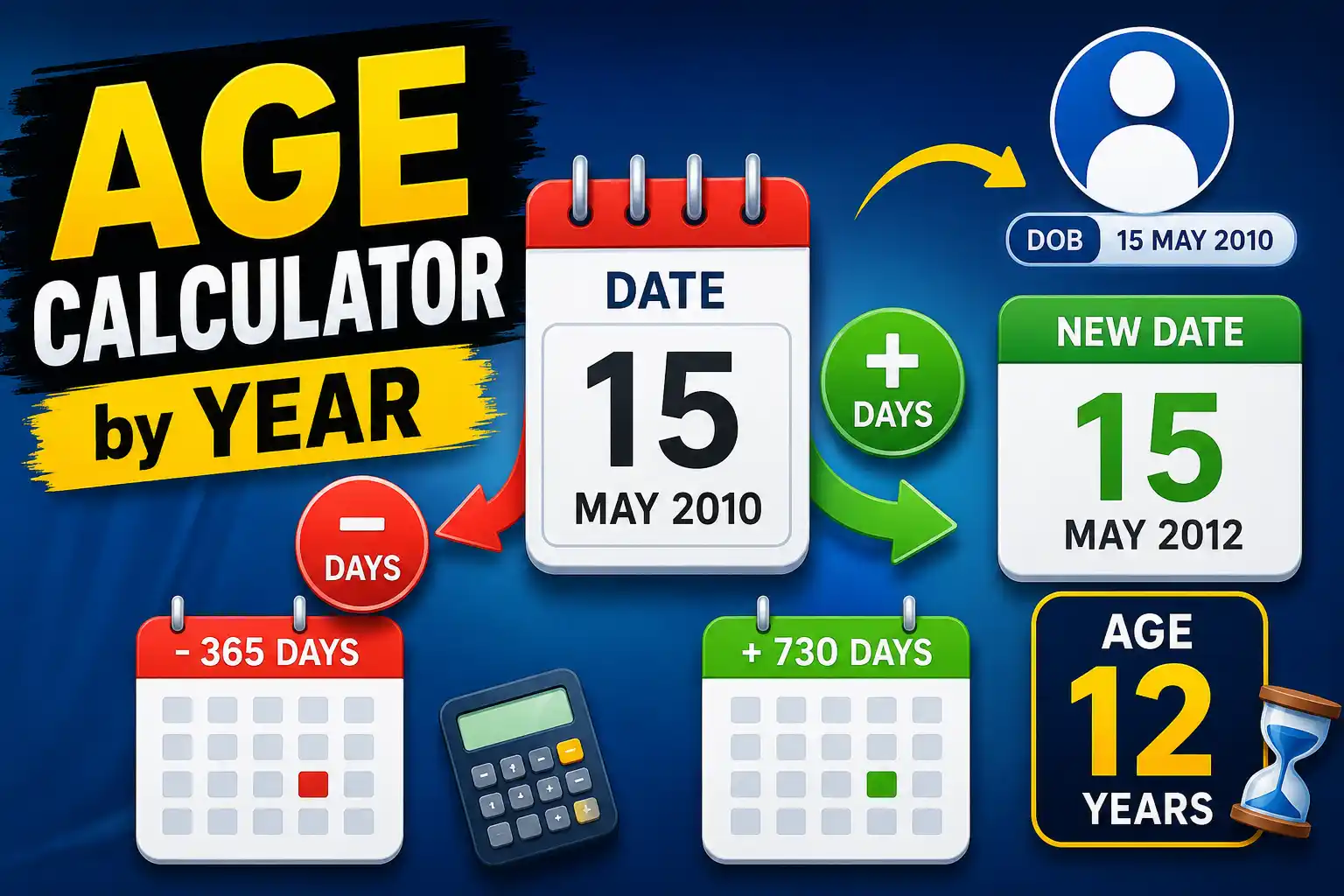
Age in Years = Current Year - Birth Year
If the current date is before the birthday:
Age in Years = Age in Years - 1
This might seem too simple, but it's the foundation for everything else. The real complexity comes when we calculate months and days.
Handling Different Time Units
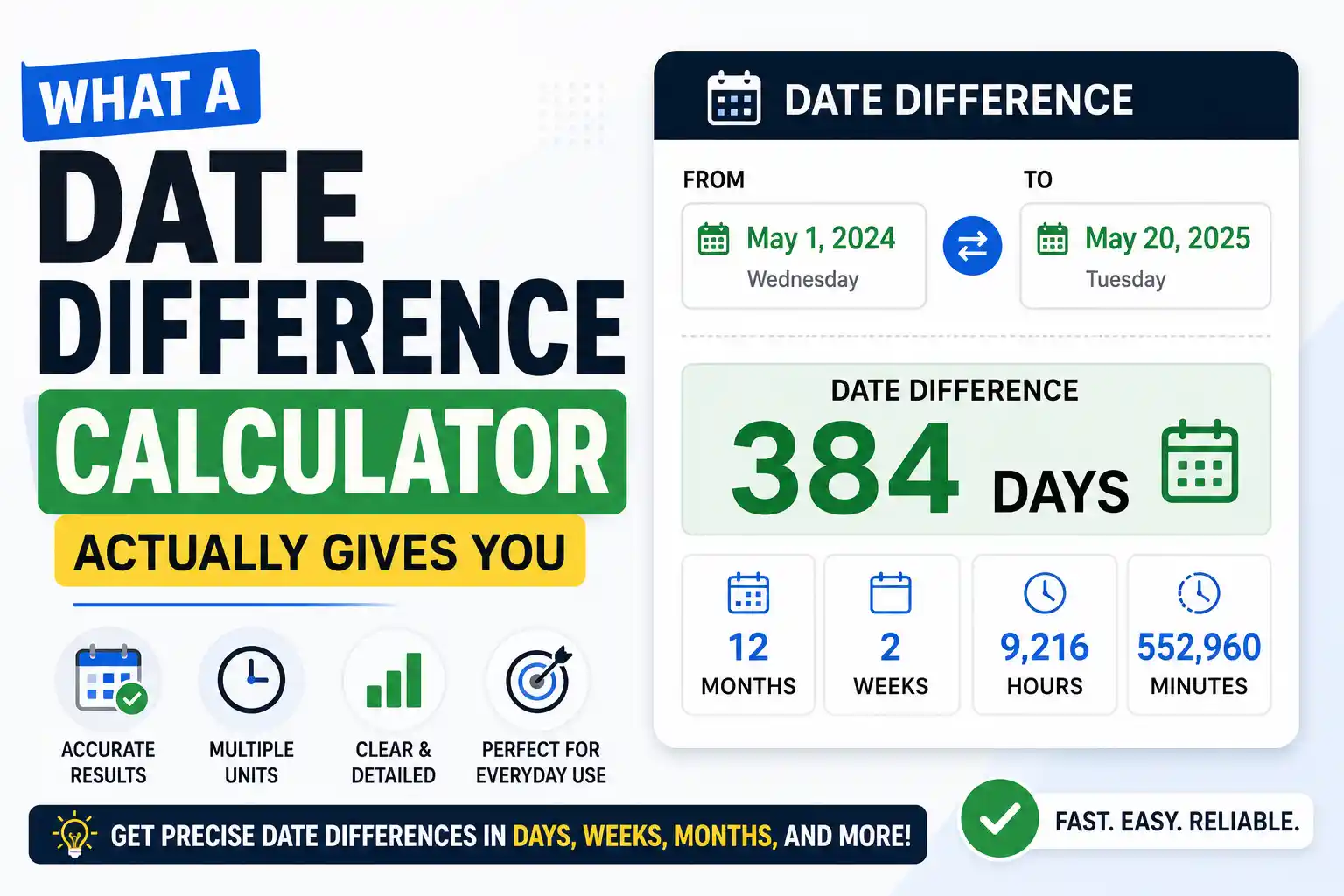
After calculating your age in years, months, and days, a good age calculator will also show your age in other units. These conversions are based on the exact number of days you've been alive.
Age in Weeks = Total Days / 7
Age in Months = Total Days / 30.44 (average)
Age in Hours = Total Days * 24
Age in Minutes = Total Days * 24 * 60
Age in Seconds = Total Days * 24 * 60 * 60
The average month length of 30.44 days is used because months vary in length. Some months have 31 days, April has 30, and February has 28 or 29.
Leap Year Handling
Leap years add an extra day to the calendar every four years. This means that if you've lived through any leap years, your total days alive is slightly higher than a simple calculation would suggest.
An age calculator automatically accounts for leap years. It knows which years are leap years and adds the extra day to your total days count. This ensures your age is accurate down to the day.
Manual Age Calculation vs Using an Age Calculator
I often encourage people to understand how to calculate age manually because it helps them appreciate what the online tool is doing. But let's be honest—once you experience the speed and accuracy of a digital age calculator, you're unlikely to go back to manual methods for important calculations.
Want to calculate your exact age instantly? Use our Age Calculator.
The Manual Method
To calculate your age manually, here's the step-by-step process:
Start with the birth date and the current date. Subtract the birth year from the current year. Check if the birthday has already occurred this year. If it hasn't, subtract one from your initial age calculation.
For example, let's say today is August 15, 2025. If you were born on May 10, 1990, your age is 35. Why? The initial difference (2025 - 1990 = 35) is already correct because May is before August.
But if you were born on October 10, 1990, your age would be 34 because October hasn't arrived yet this year. The initial difference of 35 would be reduced to 34.
This manual method works, but it requires careful attention to the dates. You must remember which months have 30 and 31 days. You must account for leap years. The more precise you need your age to be, the more complicated the manual calculation becomes.
The Age Calculator Advantages
An age calculator offers several advantages over manual calculation:
First, it's instant. You enter your birth date, click a button, and the result appears immediately. No counting on fingers or consulting calendars.
Second, it's accurate. The calculation is performed by software that has no fatigue, no distraction, and no possibility of a mental arithmetic error.
Third, it's comprehensive. A good age calculator doesn't just give you your age in years. It shows months, weeks, days, hours, minutes, and seconds. It tells you when your next birthday is and how many days are left until then.
Step-by-Step Examples
To really understand age calculation, let's walk through some examples together. I'll show you how the math works, and you can see why an age calculator is so helpful.
Example 1: Birthday Has Already Occurred
Today is August 15, 2025. The person was born on March 10, 1990.
The initial age calculation is 2025 - 1990 = 35 years. Since March 10 has already passed this year, the age remains 35.
Now let's calculate the months. From March to August is 5 months. So the person is 35 years and 5 months old.
For days, we look at the day difference. Today is the 15th, and the birth day is the 10th. Since 15 is greater than 10, we simply subtract: 15 - 10 = 5 days.
The exact age is 35 years, 5 months, and 5 days.
An age calculator would give you this result instantly, without any need to count months or track days.
Example 2: Birthday Has Not Yet Occurred
Today is August 15, 2025. The person was born on October 10, 1990.
The initial age calculation is 2025 - 1990 = 35 years. Since October 10 hasn't arrived yet, we subtract one year. The age is 34 years.
For months, we count from October 10 to August 15. We're in August, but October hasn't come yet. So we think about it differently. From October 2024 to October 2025 would be one year. Since we're only at August 2025, we haven't reached that full year. So the months are: October to November is 1 month, November to December is 2 months, December to January is 3 months, January to February is 4 months, February to March is 5 months, March to April is 6 months, April to May is 7 months, May to June is 8 months, June to July is 9 months, July to August is 10 months. But wait, we started from October 2024. Actually, let's simplify: from October to August is 10 months, but we haven't yet reached October 2025. So the person is 34 years and 10 months old.
The exact age is 34 years, 10 months, and 5 days.
Example 3: Birthday Is Today
Today is August 15, 2025. The person was born on August 15, 1990.
The age calculation is simply 2025 - 1990 = 35 years. No adjustment needed. The birthday has occurred today.
So the exact age is 35 years, 0 months, and 0 days. Today is the person's birthday.
Example 4: Leap Year Birthday
Today is March 1, 2024. The person was born on February 29, 2020.
First, check if the birthday has occurred. February 29, 2024 doesn't exist because 2024 is a leap year, but wait—2024 is actually a leap year. So February 29, 2024 does exist. The birthday has occurred. So the age is 2024 - 2020 = 4 years.
For months, from February to March is 1 month. So the age is 4 years and 1 month.
For days, from February 29 to March 1 is 1 day. So the age is 4 years, 1 month, and 1 day.
But what if today was March 1, 2025? 2025 is not a leap year, so February 29 doesn't exist. The person born on February 29, 2020 would typically celebrate their birthday on February 28 or March 1. Many age calculators would consider the birthday to have occurred on March 1, making the age 5 years. The exact treatment varies, which is why a reliable age calculator is valuable for these special cases.
How Leap Years Affect Age Calculation
Leap years are fascinating. They exist because the Earth's orbit around the sun takes about 365.2422 days. Our calendar year of 365 days is slightly shorter, so we add an extra day every four years to catch up.
This means that every fourth year has 366 days instead of 365. The extra day is February 29.
For most people, leap years don't significantly affect their age in years. But if you were born on February 29, the situation is different. You technically have a birthday only once every four years. In non-leap years, many people born on February 29 celebrate on February 28 or March 1.
For age calculation purposes, the convention varies. Some systems treat the birthday as February 28 in non-leap years. Others use March 1. The most accurate approach, used by sophisticated age calculators, is to base the calculation on the actual number of days lived, not on birthday celebrations.
Leap years also affect your age in days. Each leap year you've lived through adds one extra day to your total days alive. If you were born on January 1, 2000, and today is January 1, 2024, you've lived through 24 years, but you've also lived through 6 leap years (2000, 2004, 2008, 2012, 2016, 2020). So your total days alive is 24 * 365 + 6 = 8,766 days.
An age calculator automatically handles all of this complexity.
Common Misconceptions About Age Calculation
Over the years, I've encountered several misconceptions about age calculation. Let me clear them up for you.
Misconception: Age Is Just the Difference in Years
Many people think age is simply the difference between the current year and the birth year. But this is only true if the birthday has already occurred this year. If it hasn't, you need to subtract one year.
This is the most common mistake I see. People calculate their age in January and use the wrong age for the rest of the year until their birthday.
Misconception: All Months Have the Same Number of Days
This misconception leads to errors when calculating age in months. Some months have 31 days, some have 30, and February has 28 or 29. For exact age in months and days, you need to account for these variations.
An age calculator knows the length of each month and adjusts automatically.
Misconception: Chronological Age and Biological Age Are the Same
These concepts are different. Chronological age is your calendar age. Biological age is a measure of how old your body appears. Some people are biologically older or younger than their chronological age. An age calculator only measures chronological age.
Why Age Calculators Are So Accurate
The accuracy of an age calculator comes from two factors: the algorithm it uses and the way it handles edge cases.
The algorithm used by a reliable age calculator is based on precise mathematical principles. It handles all the complexities of dates: different month lengths, leap years, and the way we represent dates.
Modern age calculators use sophisticated date-time libraries that have been tested and refined over many years. These libraries handle time zones, different calendar systems, and even historical date changes, like the transition from the Julian to the Gregorian calendar.
For the highest accuracy, choose an age calculator that also respects your privacy and doesn't store your data.
Common Mistakes in Age Calculation
I've seen people make all kinds of mistakes when calculating age. Here are the ones I see most often.
Ignoring Whether the Birthday Has Passed
This is the classic mistake. You simply subtract the birth year from the current year, forgetting to check if the birthday has occurred this year. If you do this in July, and your birthday is in December, you'll think you're one year older than you actually are.
Forgetting Leap Years
Leap years add an extra day every four years. If you're calculating age in days, and you ignore leap years, your calculation will be off by one day for each leap year that has occurred since your birth.
For someone born in 2000, this could be a difference of 6 or 7 days—enough to matter for some purposes.
Using the Wrong Date Format
This mistake is especially common when entering dates into software. If you enter 02/03/2024, does that mean February 3 or March 2? The answer depends on the date format used in your country or software.
The safest approach is to use a four-digit year and to spell out the month, or to ensure you know exactly what format the software expects. A good age calculator will accept multiple date formats and clarify which one you're using.
Using an Age Calculator: What to Look For
When choosing an online age calculator, there are several features to consider.
The calculator should be user-friendly, with a clear input area for your date of birth and the current date. It should also show the current date automatically, so you don't have to check your calendar separately.
The results should be comprehensive, showing age in years, months, weeks, days, hours, minutes, and seconds. This demonstrates that the calculator is performing the calculations accurately.
The calculator should handle edge cases: February 29 birthdays, different date formats, and different time zones.
And of course, the calculator should respect your privacy. It shouldn't store your date of birth or share it with third parties.
Why You Should Use a Professional Age Calculator
When I need to calculate my age for something important—a legal form, a medical appointment, or a job application—I always use a professional age calculator. Why?
Because accuracy matters. For legal purposes, even a one-day error can be significant. If you're calculating someone's age for a benefit, for a retirement plan, or for a contract, accuracy is essential.
A professional age calculator also saves time. Instead of spending minutes or hours manually counting days and months, you get results instantly.
And a professional tool provides peace of mind. You don't have to worry that you missed a leap year or miscounted the days in a month. The software handles all of that for you.
When you need accurate age information, using a reliable tool is the best choice.
Calculate Your Age Online
Now that you understand how age calculators work and why they're accurate, why not try one yourself?
At MiniToolsPro, we offer a free age calculator that instantly computes your exact age in years, months, weeks, days, hours, minutes, and seconds. It handles leap years, February 29 birthdays, and all date formats automatically.
Our age calculator is browser-based and works on both desktop and mobile devices. There's no installation required, no account creation needed, and it's completely free to use.
Whether you're calculating your own age, preparing for an official document, or just curious, our age calculator provides quick and accurate results.
I encourage you to try it for yourself and see how easy accurate age calculation can be.
Explore More Age Calculation Guides
For a practical explanation of calculating age manually, read our How to Calculate Age guide. If you're interested in the mathematics behind the result, see our Age Calculation Formula Explained article. You can also return to our Age Calculator Guide for related topics and age calculation tools.
Frequently Asked Questions
How does an age calculator work?
An age calculator works by subtracting your date of birth from the current date. It accounts for differences in month lengths and leap years. The result shows your exact age in years, months, days, and other units. It's a precise mathematical calculation performed by software that handles all date complexities automatically.
Is an age calculator more accurate than manual calculation?
Yes, an age calculator is generally more accurate because it eliminates human error. It automatically accounts for leap years, different month lengths, and date formats. When you calculate age manually, you risk forgetting these details or making arithmetic errors.
Can an age calculator handle February 29 birthdays?
Yes, a good age calculator handles February 29 birthdays correctly. In non-leap years, it treats the birthday as either February 28 or March 1. Some calculators base the age on the actual number of days lived since February 29 in the birth year.
What is the difference between chronological age and biological age?
Chronological age is your actual age in years, months, and days—it's the time that has passed since you were born. Biological age is a measure of how old your body appears based on health markers and lifestyle factors. An age calculator measures chronological age exclusively.
How do I calculate my age in months?
To calculate your age in months, multiply your age in years by 12 and add the number of months since your last birthday. For example, someone who is 25 years and 4 months old is 304 months old. An age calculator will show this automatically.
How do I calculate my age in days?
To calculate your age in days, add the total days you've lived. This includes all days in each year you've lived, plus any leap year days. Because of leap years and varying month lengths, this is complex to do manually. An age calculator does it instantly.
Can age calculators make mistakes?
Reliable age calculators from reputable sources are highly accurate. However, mistakes can occur if you enter the wrong date or use the incorrect date format. Always verify your input dates before calculating, and choose an age calculator from a trusted source.
Which age is used on official documents?
Official documents in most countries use chronological age, calculated from your date of birth to the current date. The specific age format varies by country. For example, some countries use age in years only, while others calculate age in years, months, and days.
Final Thoughts
Understanding how to calculate your age is a fundamental skill. Whether you do it manually or use an age calculator, knowing the correct method ensures you always have accurate information for legal, medical, educational, and personal purposes.
Manual calculation helps you understand the underlying principles. It's valuable to know how the math works. But for speed, accuracy, and convenience, a good online age calculator is the most practical choice.
I encourage you to try the age calculator at MiniToolsPro. It's free, accurate, and easy to use. You'll get instant results and never have to wonder about your exact age again.
Share this article 👇
0 Comments