
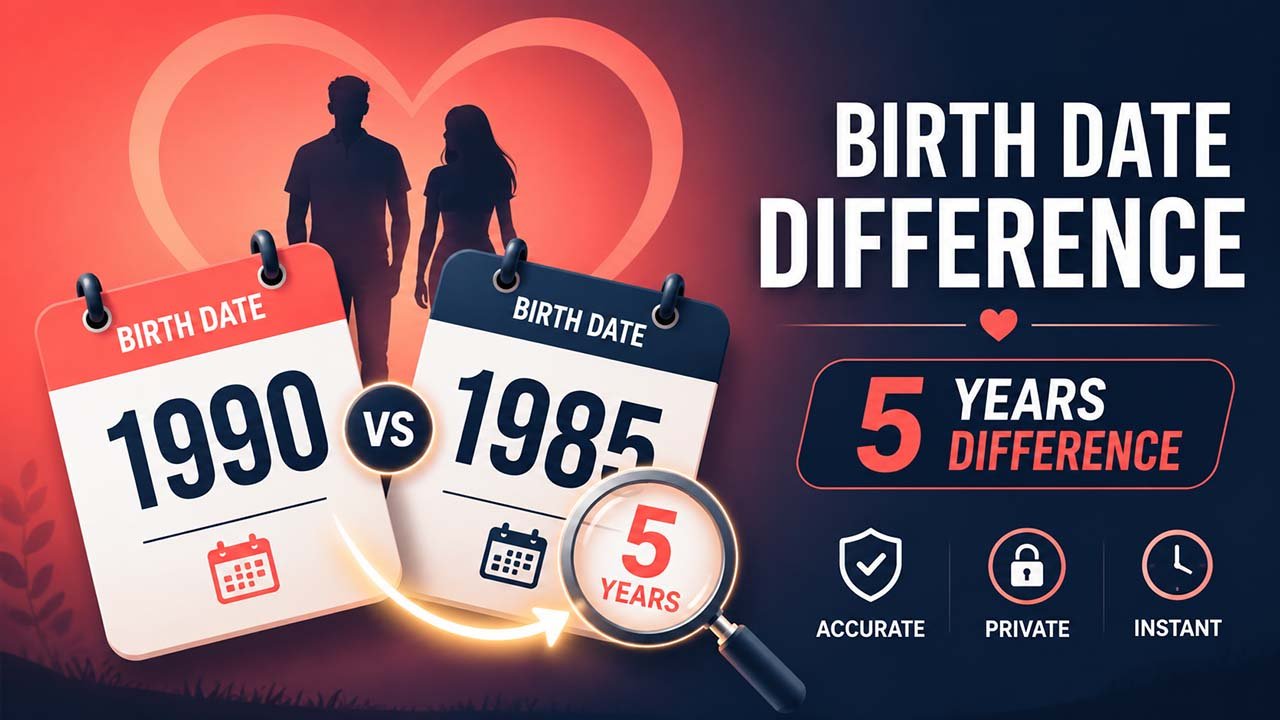
Age gaps in relationships have always sparked curiosity and debate. Whether you're exploring a new connection with someone years apart or simply fascinated by the dynamics of age-dissimilar couples, understanding the numbers can offer a valuable perspective. This article explores how an age difference calculator can help you navigate the complexities of age gaps, understand relationship dynamics, and make informed decisions about your romantic life.
Table of Contents
Understanding Age Difference
What is Age Difference?
An age difference, or age gap, refers to the chronological age disparity between two people. In the context of romantic relationships, this simply means the number of years, months, and days that separate two partners' birth dates. While some couples share similar ages, others navigate gaps of 10, 20, or even more years.
Age differences can be calculated with precision using an age difference calculator, which accounts for leap years and varying month lengths to provide an exact measurement of the gap between two birth dates. This calculation considers the Gregorian calendar, the global standard that tracks 365 days per year and 366 in leap years.
Importance of Age Difference in Relationships
Age differences matter because they influence relationship dynamics in several important ways. Couples with significant age gaps may face unique challenges related to life stages, shared experiences, and social perceptions. However, research shows that relationship success ultimately depends on communication, shared values, and mutual respect rather than age alone.
As DU psychology professor Galena Rhoades points out, "There's no reason to think that an age-gap relationship would mean that two people don't share the same core values—and that's really important in relationships succeeding." However, partners may have different expectations regarding communication styles, social habits, and generational perspectives that can create friction.
How to Use an Age Difference Calculator
Step-by-Step Guide
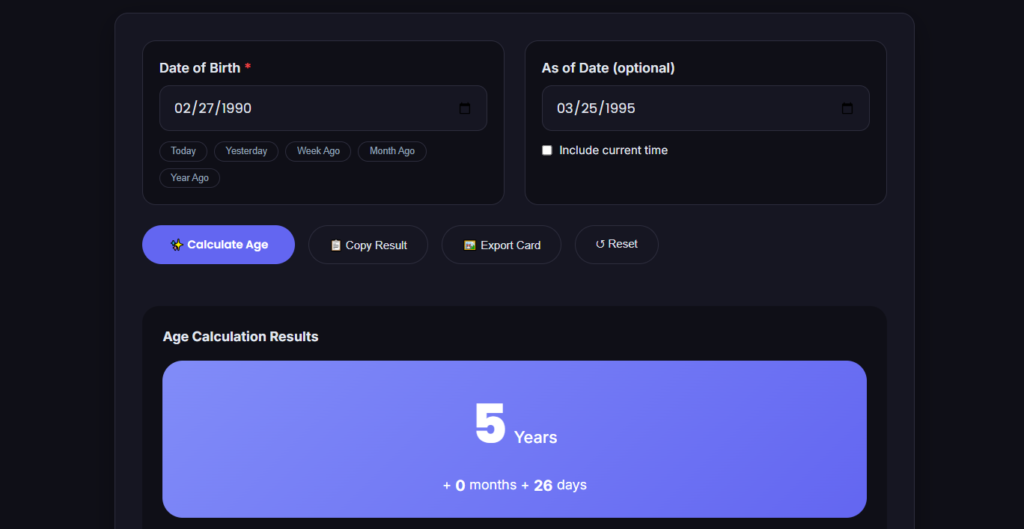
Using an age difference calculator is straightforward and takes just minutes :
- Enter the first date of birth – Input the month, day, and year for the first person (e.g., April 10, 1985)
- Enter the second date of birth – Input the second person's birth date (e.g., June 25, 1990)
- Choose a calculation date (optional) – Leave blank to calculate as of today, or select a specific date for past or future comparisons
- Click "Calculate" – The tool will display the age difference in years, months, days, and often includes total hours and minutes for fun insights
- Reset for more calculations – Clear the fields to try another pair
Examples and Scenarios
Example 1: Celebrity Couple – George and Amal Clooney
- George Clooney: Born May 6, 1961
- Amal Clooney: Born February 3, 1978
- Age difference: 16 years, 8 months, 28 days
This gap falls outside the "half your age plus 7" rule (George at 61 would have a minimum of 37.5), yet the couple has built a successful marriage, demonstrating that love can transcend age guidelines.
Example 2: Everyday Couple
- Partner A: Born October 10, 1990
- Partner B: Born March 22, 1995
- Age difference: 4 years, 5 months, 12 days
This smaller gap is the most common type of relationship worldwide, with approximately 68% of couples having age gaps under 5 years.
The Dating Age Calculator
How it Works
A dating age calculator extends beyond simply measuring the gap to help you understand socially acceptable age ranges for dating based on your current age. These tools apply the well-known "half your age plus seven" rule, which has been used as a cultural guideline since the early 1900s.
The dating age calculator determines your minimum and maximum dating ages using these formulas :
- Minimum age = (Your Age ÷ 2) + 7
- Maximum age = (Your Age - 7) × 2
For example, if you're 30, your dating range would be 22 to 46 years old. This asymmetric range expands as you get older, reflecting that age gaps become less significant with maturity.
Calculating Acceptable Age Gaps
Research provides interesting insights into how age gaps correlate with relationship stability :
- 1-year age gap: Associated with 3% divorce rate (most stable)
- 5-year age gap: Associated with 18% divorce rate (moderately stable)
- 10-year age gap: Associated with 39% divorce rate (higher risk)
- 20-year age gap: Associated with 95% divorce rate (significant challenges)
However, it's crucial to recognize that these statistics represent averages, not destiny. As Rhoades notes, "At younger ages, there are many more developed milestones that people move through and move through more rapidly. And so, the difference between an 18-year-old and a 28-year-old qualitatively feels like a bigger difference than a 28-year-old and a 38-year-old" .
The Role of Chronological Age in Relationships
Understanding Chronological Age
Chronological age refers to "the number of years lived" by a person—the simple, objective measure of time since birth. While this number is easy to calculate, it doesn't tell the whole story of human relationships.
Many people in age-dissimilar relationships report that they don't "feel" their chronological age. Research by Lara McKenzie found that couples in age-gap relationships often challenge chronological age as a meaningful measure of compatibility, emphasizing that individually variable factors like personality, experience, and appearance have greater influence on their connection. As one interviewee put it, "I think that age is just a number, and it doesn't necessarily mean a whole lot".
Age Gap Dynamics in Various Cultures
Age gap dynamics vary significantly across cultures and eras :
Western cultures typically show median age gaps of 2-3 years, with men generally older than women. Large gaps (10+ years) may raise eyebrows, but have become more accepted in recent decades.
Eastern cultures often show larger average gaps of 3-5 years in arranged marriage traditions, reflecting economic and social stability considerations.
Middle Eastern countries commonly see 4-7 year differences accepted and normalized.
Modern trends show increasing acceptance of age-dissimilar relationships. Around 8% of U.S. couples have a 10+ year gap, and 1% exceed 20 years. The phenomenon of older women dating younger men is also becoming more normalized, as seen in recent films featuring actresses like Nicole Kidman with younger co-stars.
Related Date and Age Calculation Guides
Age difference is calculated from two dates, so understanding date-based calculations can help you interpret the result correctly. See our Age Calculator Guide for more age-related calculations, or explore our Date Calculator and Date Difference Calculator Explained guides for more information about calculating the time between two dates.
Conclusion
Key Takeaways
Age differences in relationships are complex – They influence dynamics but don't determine success. Factors like communication, shared values, and mutual respect ultimately matter more than the number of years between partners.
Tools like age difference calculators offer clarity – They provide precise measurements of age gaps and can help you understand social norms and research statistics related to your situation.
Cultural and personal contexts vary greatly – What's considered acceptable in one culture may be unusual in another, and individual couples can thrive across a wide range of age differences.
Chronological age isn't the only age that matters – Many couples in age-dissimilar relationships report that their "felt age" or life stage alignment is more important than their birth certificates.
Encouragement to Use the Calculator
Understanding the numbers behind your relationship can provide a valuable perspective and help you navigate conversations about age differences with confidence. Whether you're curious about a potential partner, planning joint celebrations, or simply want to understand relationship dynamics better, an age difference calculator offers a useful starting point.
Ready to explore your age gap? Try our Age Difference Calculator to discover your exact age difference and gain insights into your relationship dynamics.
Remember, the calculator provides data, but your relationship is defined by the connection you build together. Use these tools as guides, not rules, and focus on what truly matters: love, respect, and shared happiness.
Share this article 👇
0 Comments