
Table of Contents
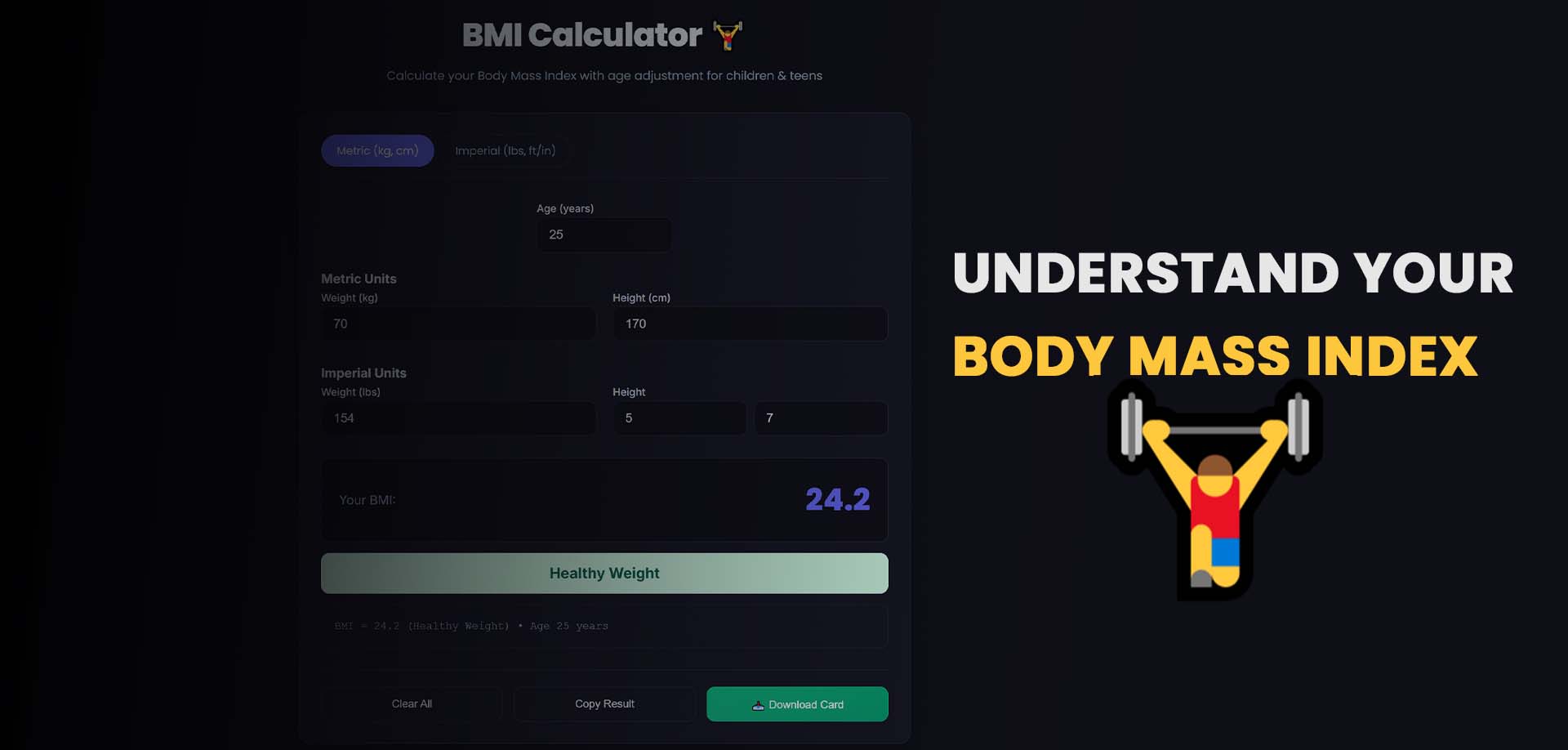
Have you ever wondered if your weight is in a healthy range for your height? You’re not alone. Maintaining a healthy weight is a cornerstone of overall wellness, but knowing where to start can be confusing. This is where the BMI calculator comes in. It’s a simple, non-invasive tool that helps you quickly determine your body mass index and understand your current health status.
In this guide, we’ll break down exactly what BMI is, walk you through the formula, explain what your results mean, and show you how to use an online tool for instant, accurate results.
What is BMI?
BMI, or Body Mass Index, is a numerical value derived from your weight and height. It is a screening tool used to categorize individuals into different weight categories that may indicate potential health risks.
Think of it as a general health indicator. While it doesn't measure body fat directly, it provides a reliable estimate for most people, helping you determine if you might be underweight, at a healthy weight, overweight, or obese.
The BMI Formula Explained
If you prefer the manual route, the calculation is straightforward. However, if math isn’t your strong suit, we highly recommend the faster method listed below.
BMI Formula (Metric)
BMI = Weight (kg) / Height (m²)
BMI Formula (Imperial)
BMI = (Weight (lbs) / Height (inches²)) x 703
Instead of doing the math yourself, which can lead to errors, the best way to get an accurate result is to use an online body mass index calculator. This eliminates the need for manual calculations and provides immediate feedback.
Calculate your BMI online for Free.
BMI Categories (Weight Status)
Once you have your BMI number, you can compare it against standard weight status categories. These ranges help you understand if you fall within a healthy spectrum for your height.
- Underweight: BMI less than 18.5
- Normal weight: BMI 18.5 – 24.9
- Overweight: BMI 25 – 29.9
- Obese: BMI 30 or higher
Understanding these categories is the first step in taking control of your health journey.
How to Calculate BMI Easily
There are two main ways to calculate your body bmi index:
1. Manual Calculation
This involves using the formula mentioned above. You must convert your height to meters (or inches) and square it, then divide your weight. This process can be time-consuming and prone to human error.
2. Using an Online BMI Calculator (Best Method)
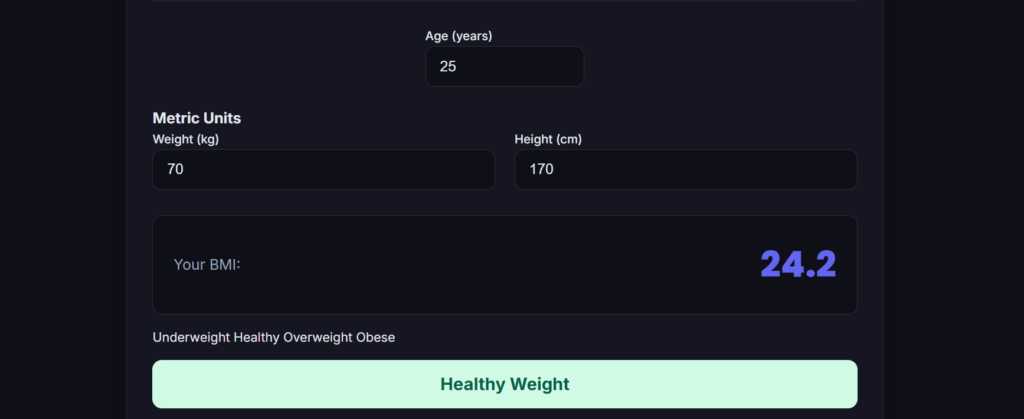
The most efficient way is to use a digital tool. By simply entering your height and weight, the mass index calculator does the heavy lifting for you. It’s quick, accurate, and hassle-free. Calculate your BMI
Example BMI Calculation
Let’s look at a practical example:
- Weight: 70 kg (154 lbs)
- Height: 1.75 m (5' 9")
Using the formula: 70 ÷ (1.75 × 1.75) = 22.86
This result (22.86) falls squarely within the Normal weight range, suggesting a healthy balance for this individual.
Benefits of Using a BMI Calculator
Why should you use a body mass ratio tool regularly?
- Quick and Accurate: You get results in seconds without any manual math.
- Health Tracking: It’s a great benchmark for tracking your fitness and weight loss progress.
- Risk Assessment: It helps flag potential health risks associated with being underweight or overweight.
- Accessibility: You can access these tools from anywhere at any time.
Limitations of BMI
While incredibly useful, it’s important to recognize the limitations of the body mass index:
- Muscle Mass: It does not distinguish between fat and muscle. Highly muscular athletes may have a high BMI but very low body fat.
- Age and Gender: It doesn't account for age or gender differences in body composition. For example, a bmi calculator women might show a higher fat percentage at the same BMI as a male due to physiological differences, yet the BMI value is the same.
- Fat Distribution: It doesn't tell you where fat is stored on your body (e.g., belly fat vs. hip fat).
In short: BMI is a general guideline, not a definitive diagnostic tool. It's a great starting point, but it shouldn't be your only health metric.
Best Practices to Maintain a Healthy BMI
Achieving and maintaining a healthy BMI is a lifestyle commitment. Here are some best practices:
- Balanced Diet: Focus on whole foods, lean proteins, fruits, and vegetables.
- Regular Exercise: Aim for at least 150 minutes of moderate-intensity activity per week.
- Hydration: Drink plenty of water throughout the day.
- Consistent Monitoring: Weigh yourself regularly and use tools like the body mass index bmi calculator to stay on track.
Frequently Asked Questions (FAQs)
What is a good BMI?
A BMI between 18.5 and 24.9 is generally considered healthy for most adults.
Is BMI accurate?
BMI is a useful general guideline, but it may not be accurate for everyone, particularly bodybuilders, pregnant women, and the elderly.
Can I calculate BMI online for free?
Yes! You can use our free tool to check your BMI in just a few seconds.
Does BMI differ for men and women?
The mathematical formula is the same for both. However, because women naturally have more body fat than men, a woman with the same BMI as a man might have a different body composition. This is why it's helpful to look at tools that might be specifically tailored for a bmi calculator female, though the underlying formula remains identical.
Final Thoughts
A BMI calculator is one of the easiest and most effective ways to get a snapshot of your weight status. It’s a powerful tool for raising awareness about your health and helping you set realistic fitness goals.
For fast, accurate, and free results, use our tool below:
Share this article 👇

0 Comments